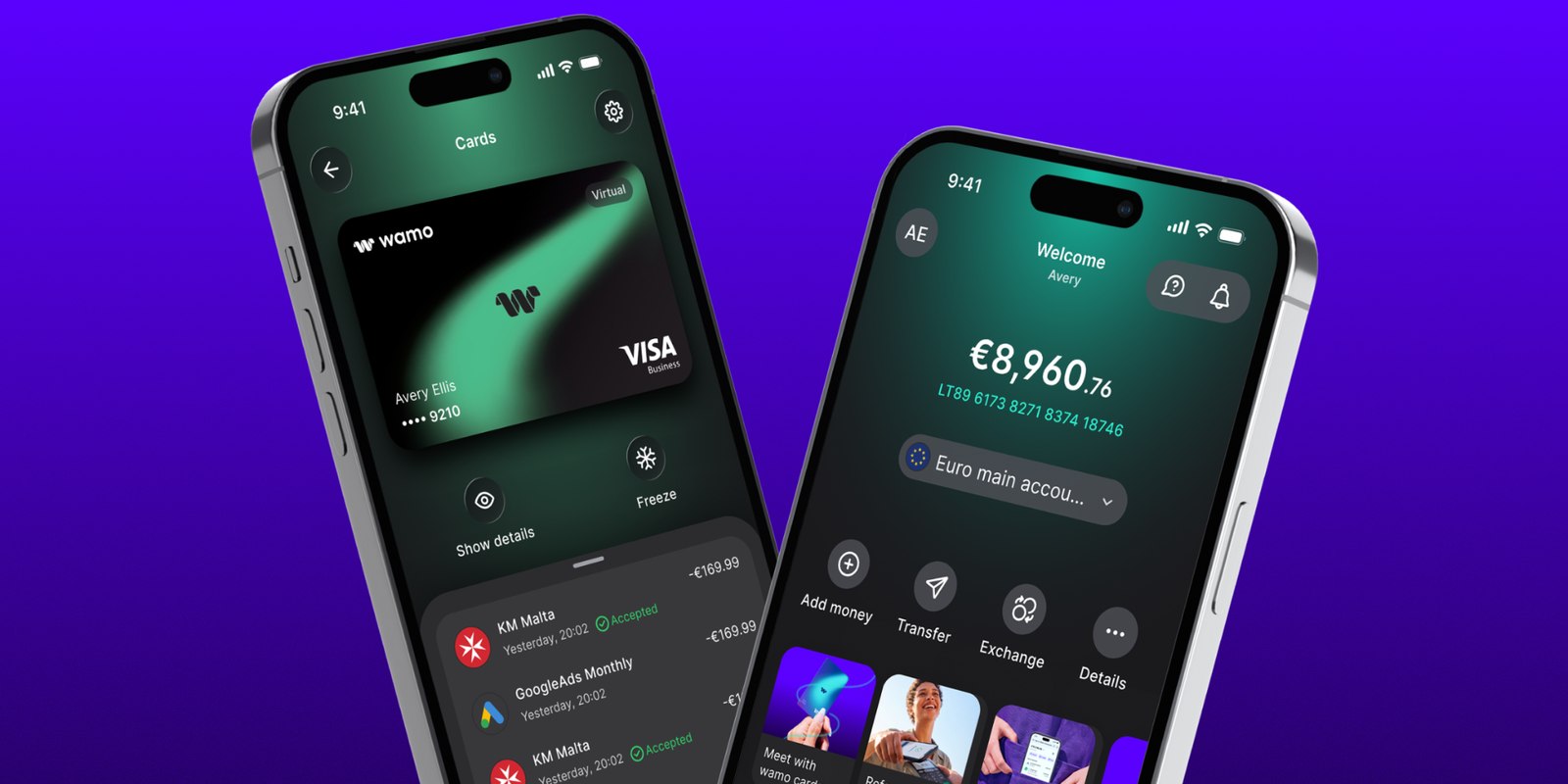
Financial technology, or fintech, keeps introducing new ways to manage money, and the virtual debit card is one of the more useful ones for businesses. If you've come across the term and wondered exactly what it means, and whether it's actually worth using, here's a clear breakdown of the pros, the cons, and what's changed since virtual cards first became mainstream.
In short, a virtual debit card is a digital version of a regular debit card. It's linked to your business account the same way a physical card is, but you don't get a physical piece of plastic. Instead, you generate a card number, expiry date, and CVV in an app, ready to use immediately.
What is the difference between a virtual debit card and a physical debit card?
Both card types have a 16-digit card number, expiry date, and CVV. A physical card has this information embossed or printed on plastic; a virtual card stores the same data securely on the server and displays it in your banking app.
The gap between the two has narrowed a lot. Physical cards can still be used in-store, online, and to withdraw cash from an ATM. Virtual cards can be used for online purchases and, once added to Apple Pay or Google Pay, for tap-to-pay purchases almost anywhere that accepts contactless payments, since mobile wallets have made virtual cards usable at physical checkouts too. The one thing a virtual card still can't do is withdraw cash from an ATM, since there's no physical card to insert.
Both card types draw from the same business account balance. A virtual card isn't a separate account you need to fund independently. It's issued instantly, managed entirely from the app, and can be frozen, deleted, or replaced in a couple of taps if something looks off.
What are the advantages of a virtual debit card?
Advantages of virtual debit cards:
- Money management and tracking
- An extra layer of security
- Fast, low-friction issuing
- Easy international payments
Money management and tracking: Large organisations often rely on high-limit corporate cards for day-to-day expenses, which can make budgets hard to track. Virtual cards make this easier: you can issue one per employee or per use case, set a spending limit on each, and get spending analytics that keep you on budget without needing to chase receipts.
An extra layer of security: You can issue as many virtual cards as you need in seconds, each with its own spending limit, and freeze or delete any individual card instantly if it's ever compromised, without affecting the rest of your account or team.
Fast, low-friction issuing: A virtual card can be created and put to use within minutes, with no waiting for plastic to arrive in the post. Card allowances are typically bundled into your business account plan, so extra virtual cards usually cost far less than ordering additional physical ones.
Easy international payments: International payments can be awkward with a physical card if a merchant doesn't accept your card network locally. A virtual card avoids that friction entirely, since it's used the same way anywhere in the world: online or, increasingly, via a mobile wallet in person.
What are the disadvantages of a virtual debit card?
No cash withdrawals: The main remaining limitation is that a virtual card can't be used at an ATM. If your business regularly needs cash, you'll still need a physical card for that.
Dependent on your phone: Since a virtual card lives in an app rather than your wallet, you need your phone (or a mobile wallet set up on it) to pay with it in person. If your phone is lost, dead, or the merchant's terminal doesn't support contactless payments, you don't have a physical fallback the way you would with a plastic card.
While businesses traditionally relied on credit cards and physical debit cards, virtual cards have become a standard part of the toolkit because they make day-to-day spending faster and easier to control. Digital financial service providers, wamo included, now issue virtual cards in minutes as part of a standard business account.